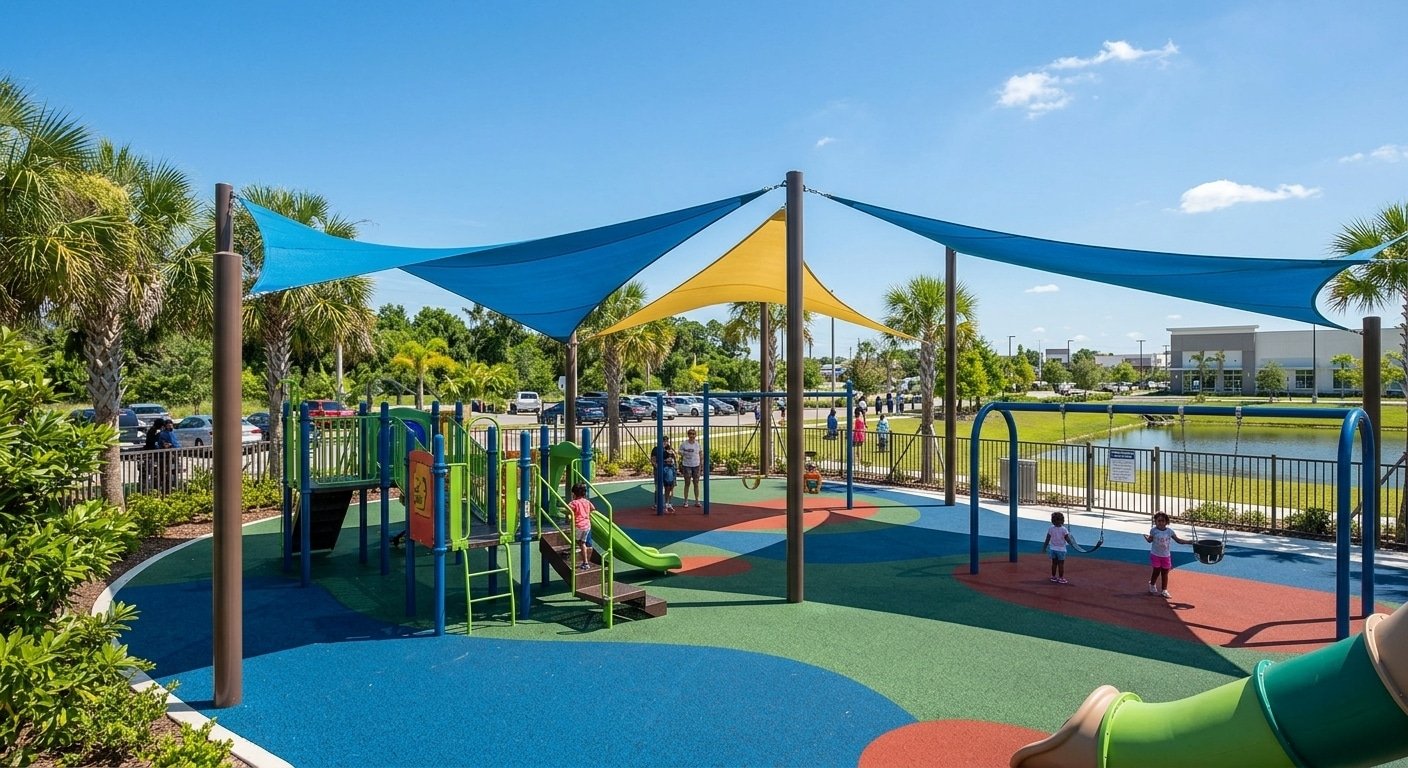
Summer in Central Florida brings packed schedules, sun soaked afternoons, and steady crowds to commercial playgrounds across Orlando, Kissimmee, Sanford, Clermont, and Lakeland. Whether you manage a school, church youth center, municipality park, HOA community, or commercial daycare, peak summer usage coincides with some of the harshest weather conditions of the year.
The combination of intense UV radiation, frequent afternoon severe thunderstorms, high humidity, and heavy foot traffic creates a perfect storm for equipment wear, structural degradation, and safety risks.
To keep your play space safe, compliant, and operating smoothly through the summer months, your facility maintenance team needs a proactive, tailored approach. Use this comprehensive Summer Commercial Playground Upkeep Checklist to protect your investment, lower liability risks, and ensure a fun, safe environment all season long.
Why Central Florida Summers Are Tough on Playgrounds
Before diving into the maintenance steps, it helps to understand why Central Florida’s climate demands extra attention during June, July, and August:
- High UV Radiation: Intense solar exposure breaks down polymers in plastic slides, swings, and roofs, leading to color fading, hairline cracks, and structural brittleness.
- Extreme Surface Heat: Dark plastics, coated metals, and poured in place rubber surfaces absorb heat quickly, often reaching temperatures capable of causing contact burns on young skin.
- Frequent Tropical Downpours: Severe afternoon thunderstorms wash away loose fill surfacing, submerge poorly drained footings, and accelerate metal rust and corrosion.
- Heavy Seasonal Foot Traffic: With school out, daily play equipment usage surges, speeding up the wear and tear on moving parts like chain links, swing hangers, and spinners.
Phase 1: Surfacing & Ground Safety Inspections
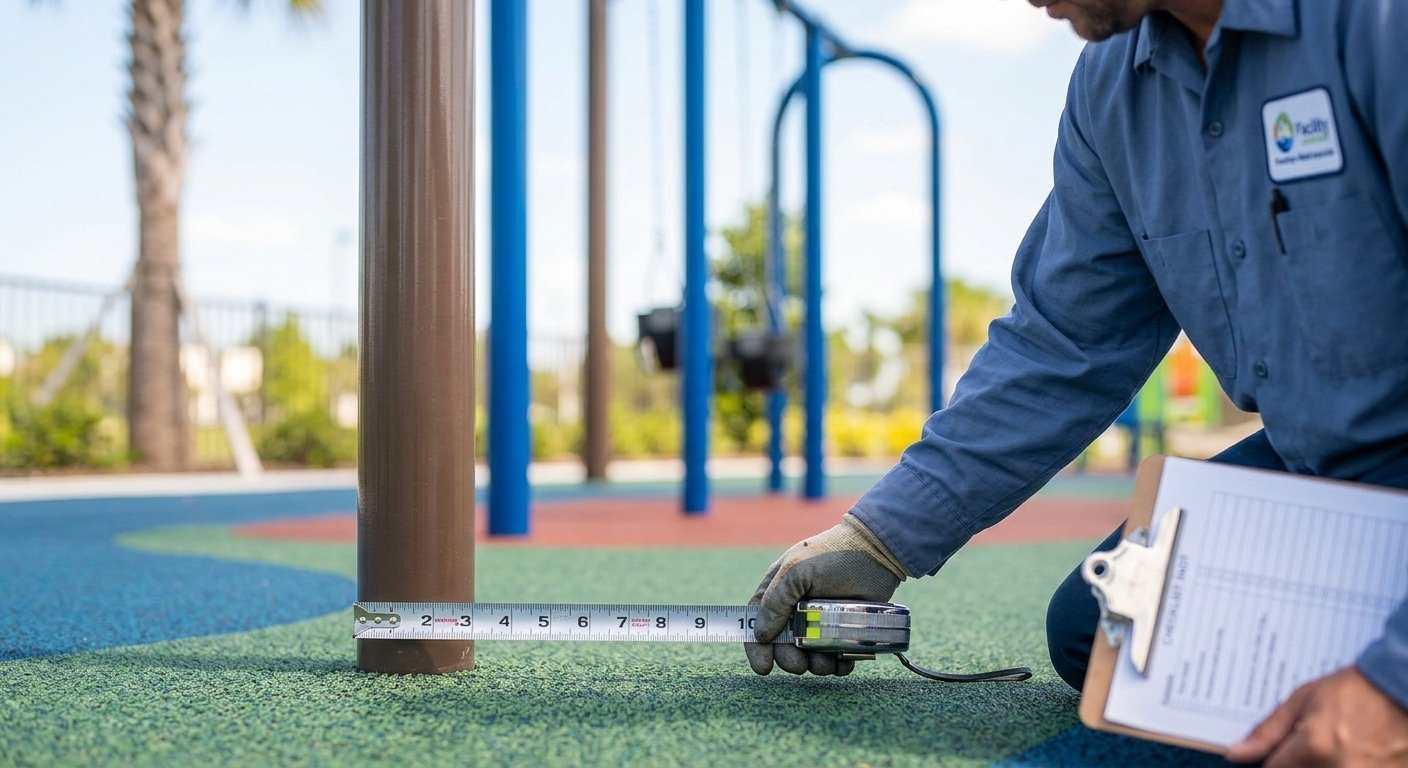
Impact absorbing surfacing is your playground’s primary defense against fall related injuries. Summer storms and heavy traffic constantly compromise surfacing levels and integrity.
1. Loose Fill Surfacing Checks (Engineered Wood Fiber & Rubber Mulch)
- Verify Depth Standards: Ensure loose fill surfacing maintains a consistent depth of 8 to 12 inches throughout the play area, especially in high impact zones like swing bays and slide exits.
- Rake High Wear Zones: Heavy landing and kicking at the base of slides and under swings push loose fill material away, exposing hard ground or concrete footings below. Daily or weekly raking redistributes material evenly.
- Inspect for Washouts: After heavy summer downpours, check perimeter borders for washouts or pooling water that has displaced surfacing.
2. Unitary Surfacing Checks (Poured In Place Rubber & Rubber Tiles)
- Inspect for Seam Separation: High heat causes rubber tiles and poured in place (PIP) rubber to expand and contract, leading to gaps, curling edges, or tripping hazards.
- Check for Pitting & Cracking: UV rays degrade rubber binders over time, causing surface crumbling, holes, or loss of impact attenuation.
- Conduct Surface Temperature Audits: On hot afternoon days, test PIP and rubber tile surface temperatures. If surfaces exceed safe thresholds, consider adding shade sail covers or posting warning signs.
Phase 2: Structural Integrity & Hardware Audits
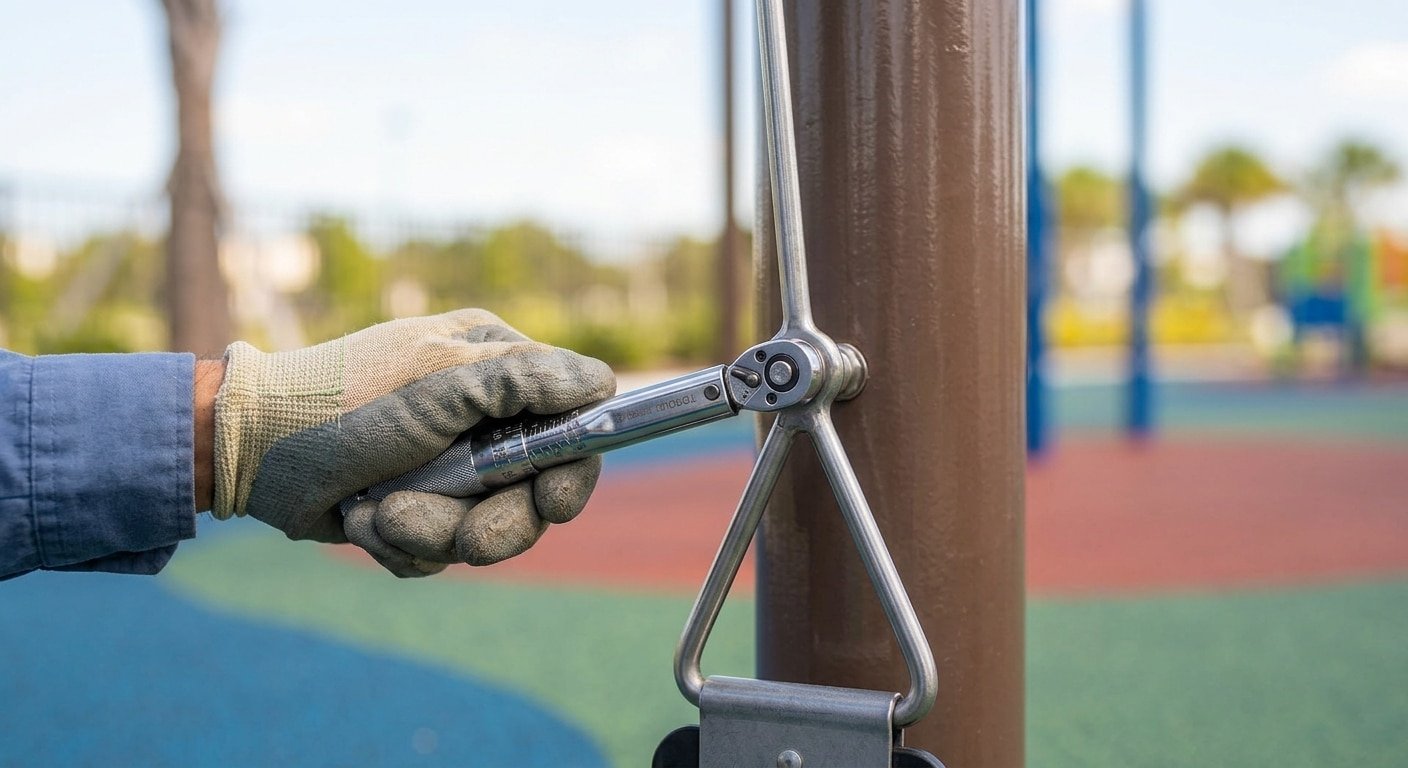
Hardware issues rarely happen overnight; they are the result of gradual wear, thermal expansion, and salt/moisture air exposure common to Central Florida.
1. Fasteners, Connectors, & Brackets
- Check for Loose Bolts & S Hooks: Thermal expansion and continuous vibration loosen hardware. Tighten all accessible bolts, nuts, clamps, and S hooks.
- Verify Closed S Hooks: S hooks on swing assemblies must be closed completely (gap less than 0.04 inches about the thickness of a dime) to prevent clothing entanglement.
- Lubricate Moving Assemblies: Apply non toxic, weather resistant industrial lubricant to swing hangers, tire swing swivels, track rides, and merry go round bearings to eliminate friction and screeching.
2. Metal Posts, Decks, & Coatings
- Inspect for Rust & Corrosion: Check post bases near the soil line where standing rainwater collects. Look for flaking paint, bubbling powder coatings, or deep rust spots.
- Touch Up Damaged Coatings: Sand down minor rust spots on steel posts and apply a rust inhibiting primer followed by commercial grade exterior touch up paint.
- Test Platform Stability: Step heavily or apply force to play decks, bridges, and stair treads to check for structural wobble or weakened welds.
Phase 3: Plastics, Components, & Shade Systems
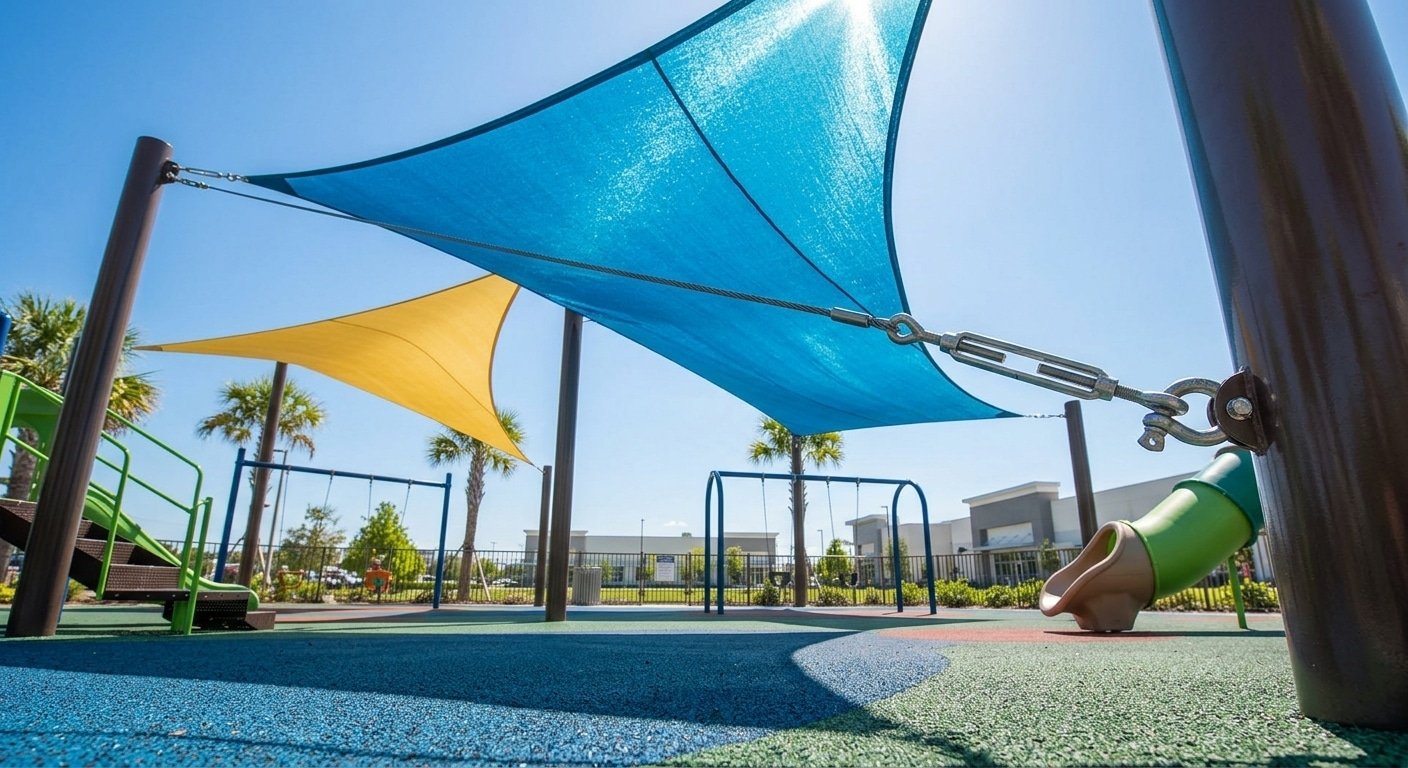
UV damage and physical wear can turn fun play features into hazard zones if left unmonitored.
1. Slides, Crawl Tubes, & Plastic Panels
- Perform Crack & Sharp Edge Sweeps: Inspect plastic slides (especially open wave slides and spiral tube joints) for hairline fractures caused by UV degradation or vandalism.
- Smooth Out Rough Edges: Sand down small plastic burrs or scratches that could snag skin or clothes. Replace any cracked plastic panel immediately.
- Clean & Sanitize Surfaces: High summer humidity and sweat breed bacteria on handrails, grab bars, and plastic touchpoints. Wash components down with mild soap, fresh water, and eco friendly sanitizer.
2. Shade Struc Fabric Canopies
- Check Fabric Tension: Summer winds and storms put heavy strain on shade sails. Ensure fabric canopies remain tightly tensioned to avoid pooling water during rainstorms.
- Inspect Support Cables & Mounting Hardware: Examine turnbuckles, shackles, and perimeter wire cables for fraying, rust, or metal fatigue.
- Remove Debris from Canopies: Use a pole or soft brush to clear fallen tree branches, palm fronds, and leaves from the top of shade sails to prevent rot and sagging.
Phase 4: Environmental & Perimeter Safety Checks
The area surrounding your commercial playground is just as critical as the play equipment itself.
1. Landscape & Tree Maintenance
- Trim Overhead Branches: Prune dead or hanging tree branches near play structures to prevent them from snapping and falling during afternoon summer severe storms.
- Check for Toxic Plants & Bees: Inspect perimeter fencing and timber borders for stinging insect nests (wasps, hornets, fire ants) and poisonous weeds or vines.
2. Fencing, Gates, & Accessibility
- Test Self Closing Gate Hinges: Ensure perimeter safety gates open smoothly and latch reliably to keep young children from wandering into parking lots or retention ponds.
- Inspect ADA Access Paths: Confirm that concrete walkways leading to the playground entrance remain clear of overgrown turf, roots, or washed out dirt.
Summer Maintenance Checklist Quick Reference Table
Keep your facilities team on track with this handy frequency schedule:
Inspection Task |
Daily / Weekly |
Monthly |
Pre Storm / Seasonal |
| Trash, glass, and sharp object ground sweep | X | ||
| Rake high wear surfacing zones (slides/swings) | X | ||
| Inspect for open S hooks and loose swing chains | X | ||
| Check surfacing depth (maintain 8–12 inches) | X | ||
| Tighten bolts, clamps, and platform fasteners | X | ||
| Lubricate swing hangers and swivel bearings | X | ||
| Inspect shade sail tension and cable integrity | X | ||
| Sanitize high touch handrails and plastic panels | X | ||
| Trim overhanging tree limbs and clear drains | X | ||
| Conduct full Certified Playground Safety Audit (CPSI) | X |
Protect Your Investment with Professional Inspections
While daily sweeps and monthly upkeep by on site staff handle regular wear, scheduling an annual or semi annual audit by a Certified Playground Safety Inspector (CPSI) is the ultimate way to manage liability and extend equipment lifespan. A professional audit tests compliance against ASTM International and U.S. Consumer Product Safety Commission (CPSC) safety guidelines using specialized tools like head/torso probes and protrusion gauges.
By staying proactive with your Central Florida commercial playground maintenance this summer, you’ll prevent costly emergency repairs, avoid liability headaches, and keep your community’s children playing safely all season long.