
Every year from June 1 through November 30, Florida schools and child care facilities face the threat of Atlantic hurricane season. While administrators routinely secure classroom windows, back up digital records, and establish emergency communication protocols, school playgrounds are often left vulnerable to severe weather.
A school playground represents a major financial investment and serves as a core community asset. When tropical storms or major hurricanes strike, high altitude winds, torrential downpours, and flying debris can turn play structures into severe safety hazards and lead to tens of thousands of dollars in property damage.
Preparing your school’s outdoor play environment before severe weather hits is essential for minimizing risk, maintaining safety compliance, and protecting your budget.
The Hidden Risks: Why Playgrounds Are Vulnerable to Storms
Florida’s hurricane season presents environmental hazards that test the structural integrity of outdoor recreational equipment. Understanding how tropical storms impact play equipment helps school maintenance teams take effective preventive action:
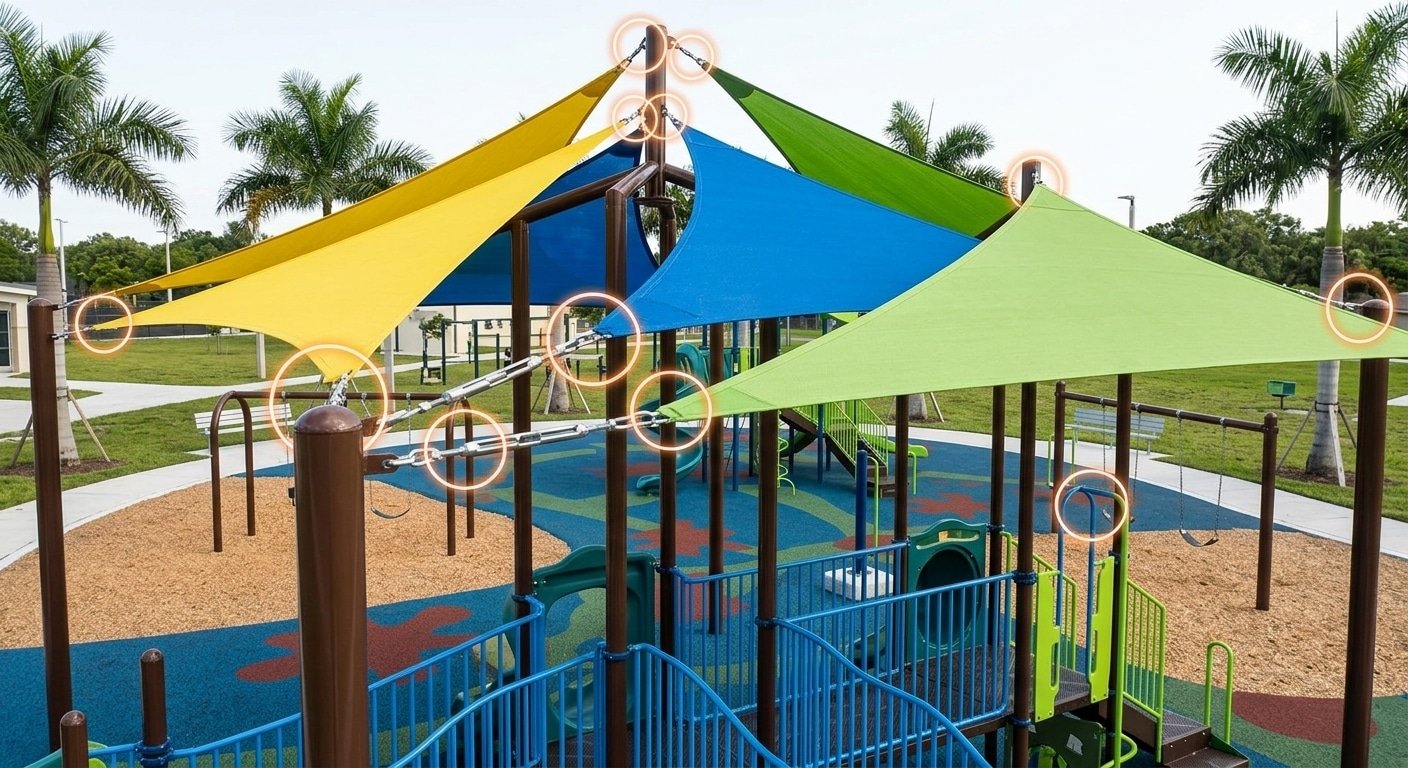
- High Velocity Winds: Gale force winds can detach loose components, shade sails, and plastic play panels, transforming them into airborne debris.
- Torrential Rain & Flooding: Heavy rainfall washes away loose fill surfacing like Engineered Wood Fiber (EWF) or rubber mulch, exposing underground concrete footings and creating fall hazards.
- Soil Erosion & Structural Instability: Saturated soil around anchor points can weaken footings, causing heavy steel columns or composite timber posts to tilt or collapse.
- Corrosion & Moisture Degradation: Standing storm water and coastal salt air accelerate hardware rusting, wood rot, and internal post deterioration.
Step 1: Pre Season Playground Safety Audit (May – June)
Preparation begins long before a named storm enters the Gulf of Mexico or Atlantic basin. Conducting a thorough pre season inspection ensures your play area is in top structural condition before extreme weather arrives.
1. Conduct a Fastener & Anchor Check
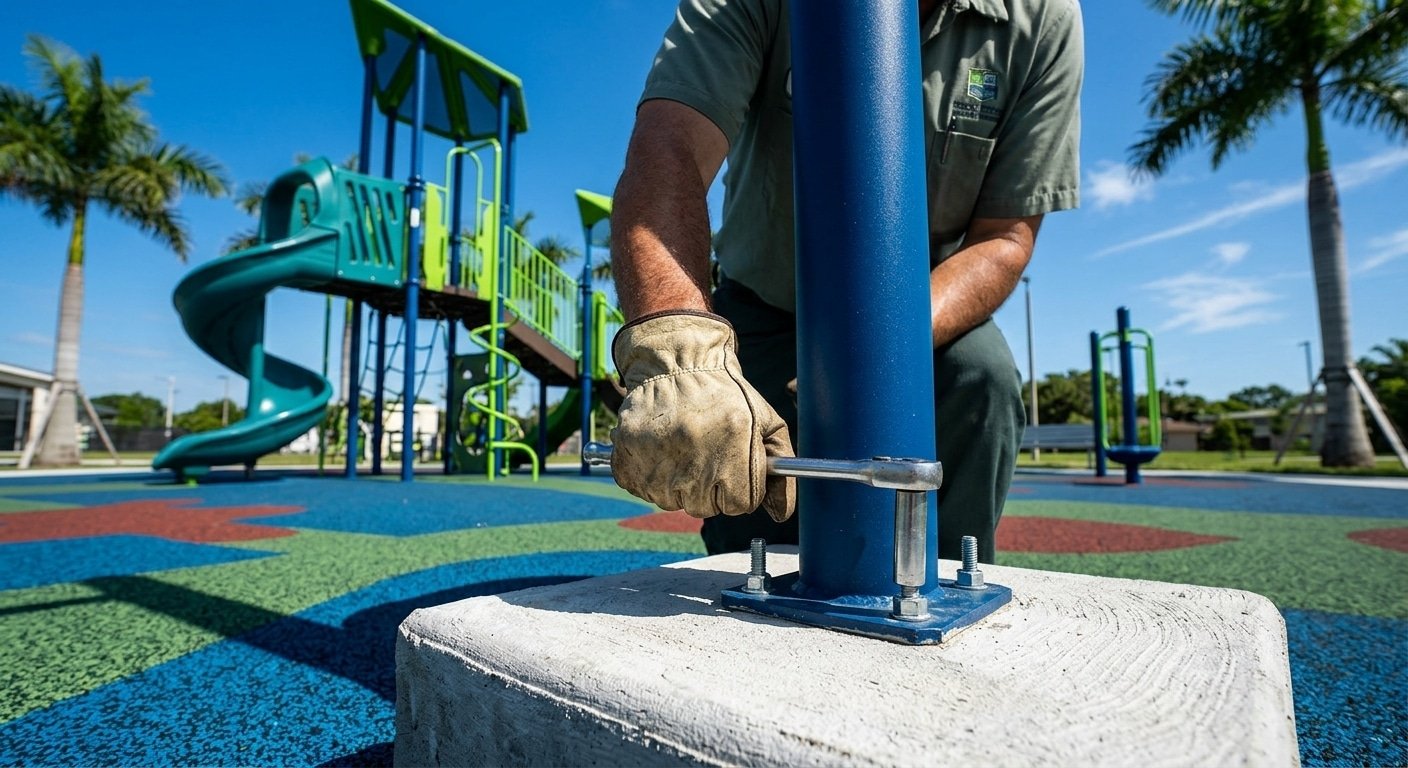
- Inspect all connecting hardware, including S hooks, bolts, clamps, and swing hangers. Tighten loose fittings to prevent wind vibration from separating components.
- Verify that structural posts remain firmly anchored into concrete footings below the soil line.
2. Inspect Overhead Structures & Shade Canopies
- Fabric shade structures act like sails in high winds and can pull heavy support posts directly out of the ground.
- Inspect shade frame welds and tensioning systems for micro fractures, rust, or metal fatigue.
3. Evaluate Drainage & Surfacing Integrity
- Ensure playground drainage channels, French drains, and perimeter curbs are clear of leaves, dirt, and organic debris.
- Check loose fill surfacing depth. Maintaining a depth of 8 to 12 inches helps prevent severe soil erosion during heavy downpours.
Step 2: The 48 Hour Pre Storm Action Protocol
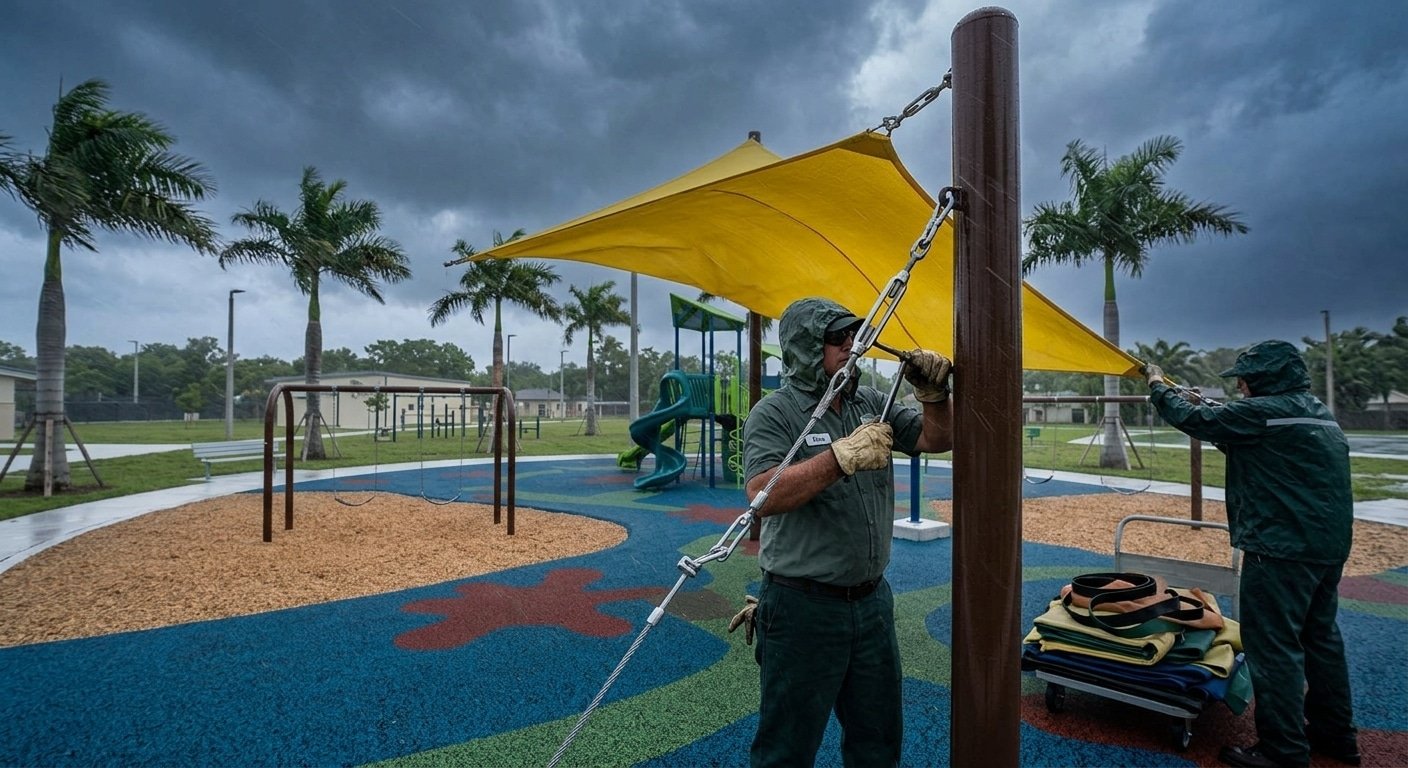
When a Tropical Storm Watch or Hurricane Warning is issued for your area, your facilities team must execute a systematic shutdown plan.
| Priority Level | Action Item | Execution Steps |
| High Priority | Remove Fabric Shade Sails | Unhook tension cables and remove all fabric shade structures. Fold, label, and store them securely indoors. |
| High Priority | Secure Moving & Loose Components | Remove belt swings, toddler swings, adaptive seats, and rope ladders. Store them in an interior equipment locker. |
| Medium Priority | Anchor Accessible Mobile Items | Move plastic playhouses, picnic tables, trash receptacles, and loose benches indoors or chain them to fixed structures. |
| Medium Priority | Protect Loose Surfacing | Cover loose fill surfacing zones with heavy duty permeable geotextile tarps anchored by sandbags to reduce washouts. |
| Low Priority | Lock & Seal Gates | Lock all perimeter access gates to prevent unauthorized entry during or immediately after the storm. |
Step 3: Immediate Post Storm Inspection & Recovery
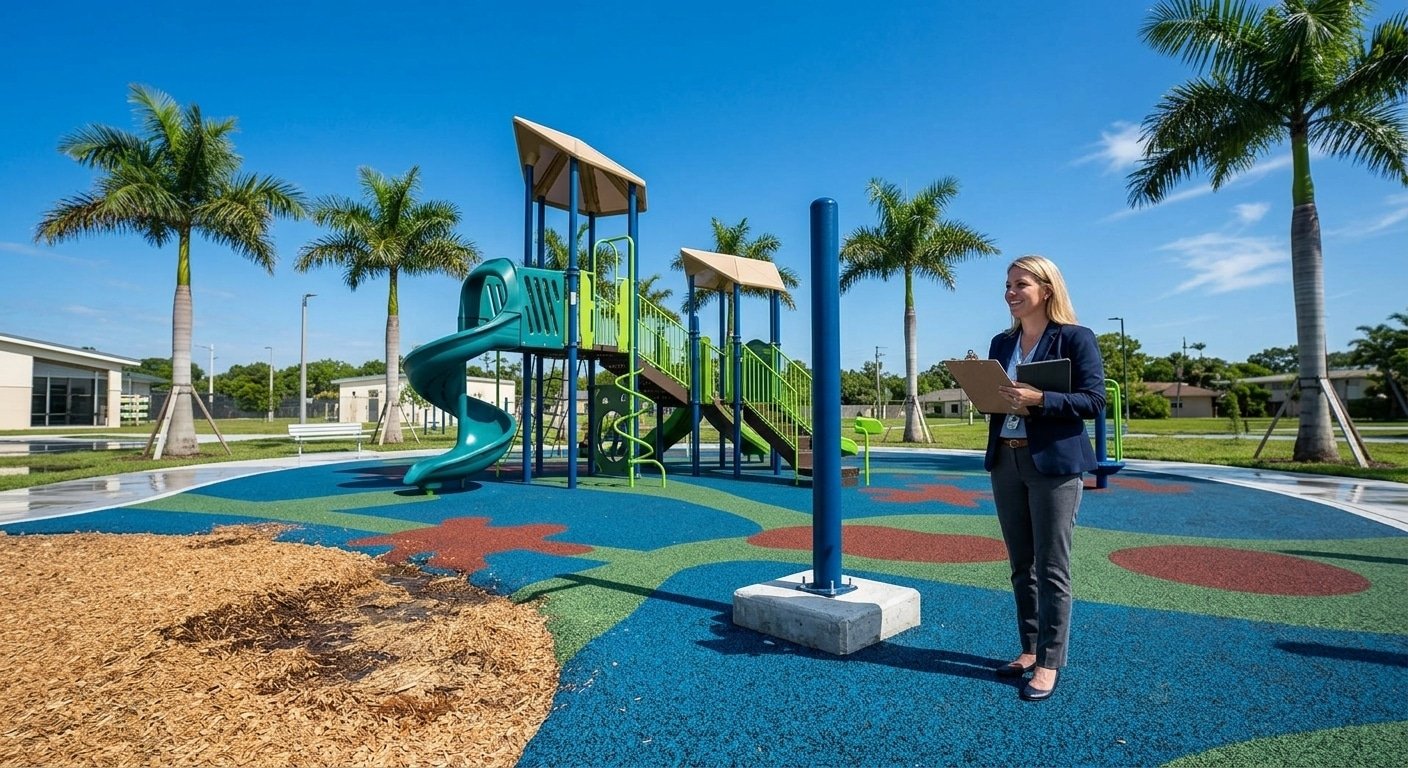
Once local authorities issue an “all clear” and it is safe to return to school grounds, the playground must remain closed until a full post storm inspection is completed. Do not allow students onto the playground until a systematic safety sweep is logged.
1. Document the Site for Insurance Claims
Before moving debris or making repairs, take detailed photos and videos of the entire playground area. Document any fallen tree branches, standing water, displaced surfacing, or structural damage for insurance adjusters and FEMA documentation.
2. Perform a Hazards Sweep
- Upended Debris: Check for sharp tree limbs, fallen power lines, broken glass, or windblown debris embedded in the surfacing.
- Biohazards & Standing Water: Stagnant stormwater can harbor bacteria, mold, and mosquitoes. Drain standing water and sanitize play surfaces exposed to floodwaters.
- Exposed Footings: Inspect the base of all play structures to ensure stormwater did not wash away protective surfacing and expose concrete footings or sharp sub bases.
3. Conduct a Structural Stability Test
Physically test main support columns, play decks, bridges, and slides. Apply manual force to check for structural sway, loosened anchors, or bent metal supports. If any play structure sways unnaturally or shows structural cracking, rope off the area and schedule a professional inspection by a Certified Playground Safety Inspector (CPSI).
Long Term Stormproofing: Upgrading Your Play Space
If your school is replacing old equipment or planning a new playground installation, incorporating storm resistant design principles reduces future maintenance costs and storm damage risk:
- Poured in Place (PIP) Rubber Surfacing: Seamless rubber surfacing stays anchored during heavy rain, eliminating the costly washouts common with loose fill wood fiber or mulch.
- Quick Release Shade Systems: Invest in shade canopy frames equipped with commercial quick release mechanisms, allowing staff to remove fabric tops in minutes rather than hours.
- Marine Grade Hardware & Coatings: Specify stainless steel fasteners and marine grade powder coated steel posts to resist rust caused by coastal salt air and tropical moisture.
Protecting Students and School Assets
Preparing your school’s playground for Florida’s hurricane season requires foresight, organization, and a clear maintenance plan. By performing pre season audits, removing high risk components before landfall, and executing thorough post storm safety inspections, school administrators can protect property investments and ensure students return to a safe play environment.
Is your school’s playground storm ready? Partner with a certified playground professional to review your facility’s safety plan, audit play equipment, or upgrade to hurricane resistant surfacing before the peak of storm season.