For Homeowners Association (HOA) board members across Florida, community playgrounds represent a double edged sword. On one hand, a well maintained, modern play space is a high value amenity that enhances property values, attracts young families, and builds community cohesion. On the other hand, outdoor play structures present significant legal, financial, and operational liability risks if neglected.
Florida’s legal landscape around premises liability, coupled with the state’s aggressive weather conditions, creates unique challenges for HOA boards. If an injury occurs on common property, board members can find themselves facing costly personal injury lawsuits, rising insurance premiums, or allegations of breaching their fiduciary duty.
Here is a comprehensive guide on HOA playground liability in Florida, explaining what board members need to know to keep children safe and protect the association from financial harm.
1. Understanding Legal Duty of Care under Florida Premises Liability Law
Under Florida law, an HOA owes a specific duty of care to residents, guests, and visitors who use common areas. In premises liability cases, playground users are typically classified as invitees individuals who have an express or implied invitation to enter and use the property.
As property managers and board members, the HOA has two primary legal duties to invitees:
- Duty to Maintain: The association must maintain common elements in a reasonably safe condition.
- Duty to Warn: The association must warn residents and visitors of known, hidden dangers or hazardous conditions that are not open and obvious.
If a child is injured because the board failed to repair a known defect such as an open S hook on a swing, a cracked plastic slide, or depleted wood fiber surfacing the court may find the HOA negligent.
2. Florida Environmental Accelerated Wear Factors
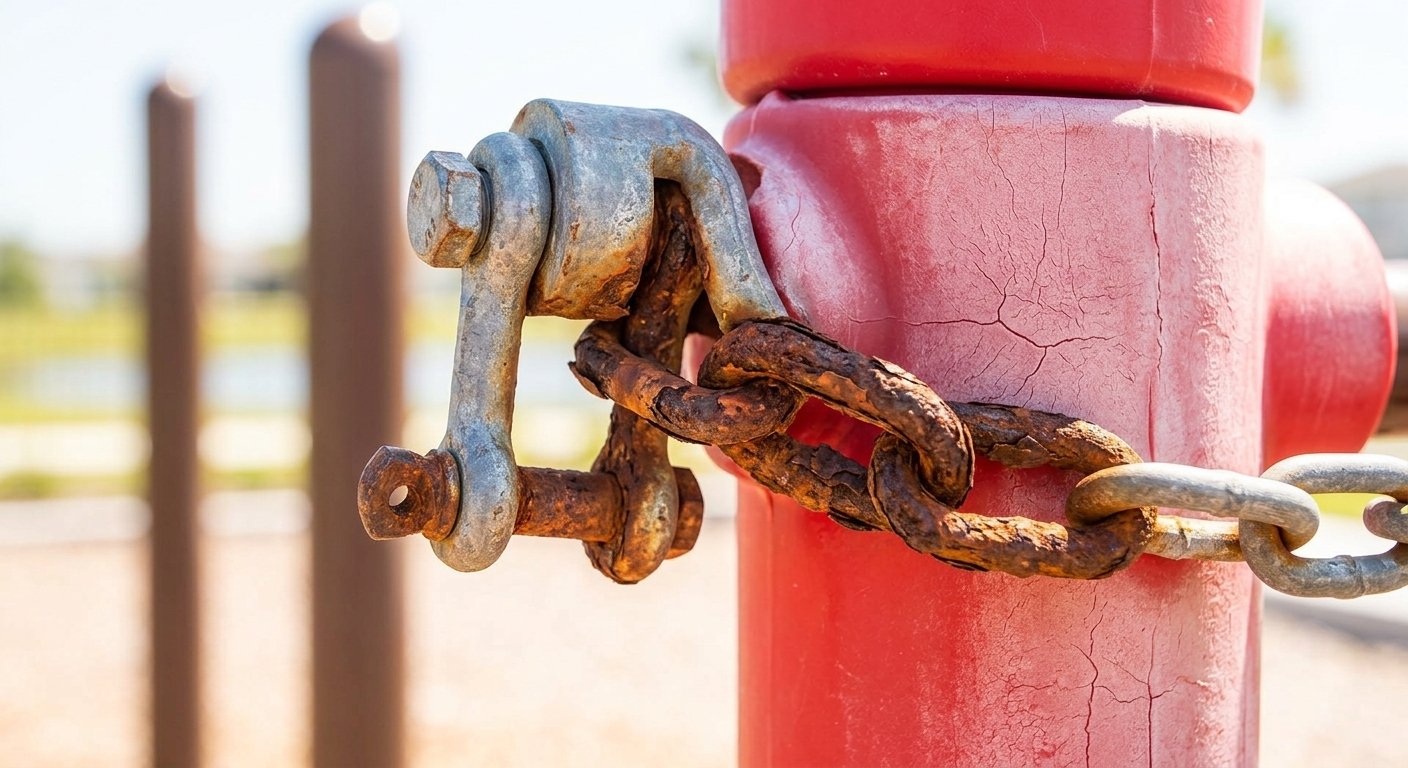
Playgrounds in Florida degrade at double the speed of structures in temperate northern climates. HOA boards that rely on standard, out of state manufacturer maintenance timelines often miss critical warning signs.
Florida board members must account for three primary climate hazards:
- Coastal Salt Air & High Humidity: Salt laden air travels miles inland, creating invisible electrolytic corrosion that rusts steel posts and internal structural connections from the inside out.
- Subtropical Solar Exposure: Intense UV radiation breaks down chemical binders in plastic slides and swings, causing hairline cracks, color fading, and structural brittleness.
- Severe Storms & Heavy Downpours: Tropical rainstorms frequently wash away loose fill surfacing (like Engineered Wood Fiber), exposing hard subterranean concrete footings and creating fall hazards.
Ignoring climate accelerated wear opens the board to severe negligence claims if an equipment breakdown causes an injury.
3. The Role of National Safety Standards: ASTM & CPSC
In injury lawsuits, Florida courts look to recognized industry standards to establish whether an HOA met its legal Standard of Care. The two primary benchmarks for commercial playgrounds are:
- ASTM International Standards (ASTM F1487): Covers structural integrity, equipment manufacturing, layout clearances, and hardware safety.
- CPSC Public Playground Safety Handbook (Publication #325): Provides federal guidelines regarding impact surfacing, age appropriate equipment design, and hazard prevention.
| Safety Parameter | Standard Requirement | Common HOA Non Compliance Issue |
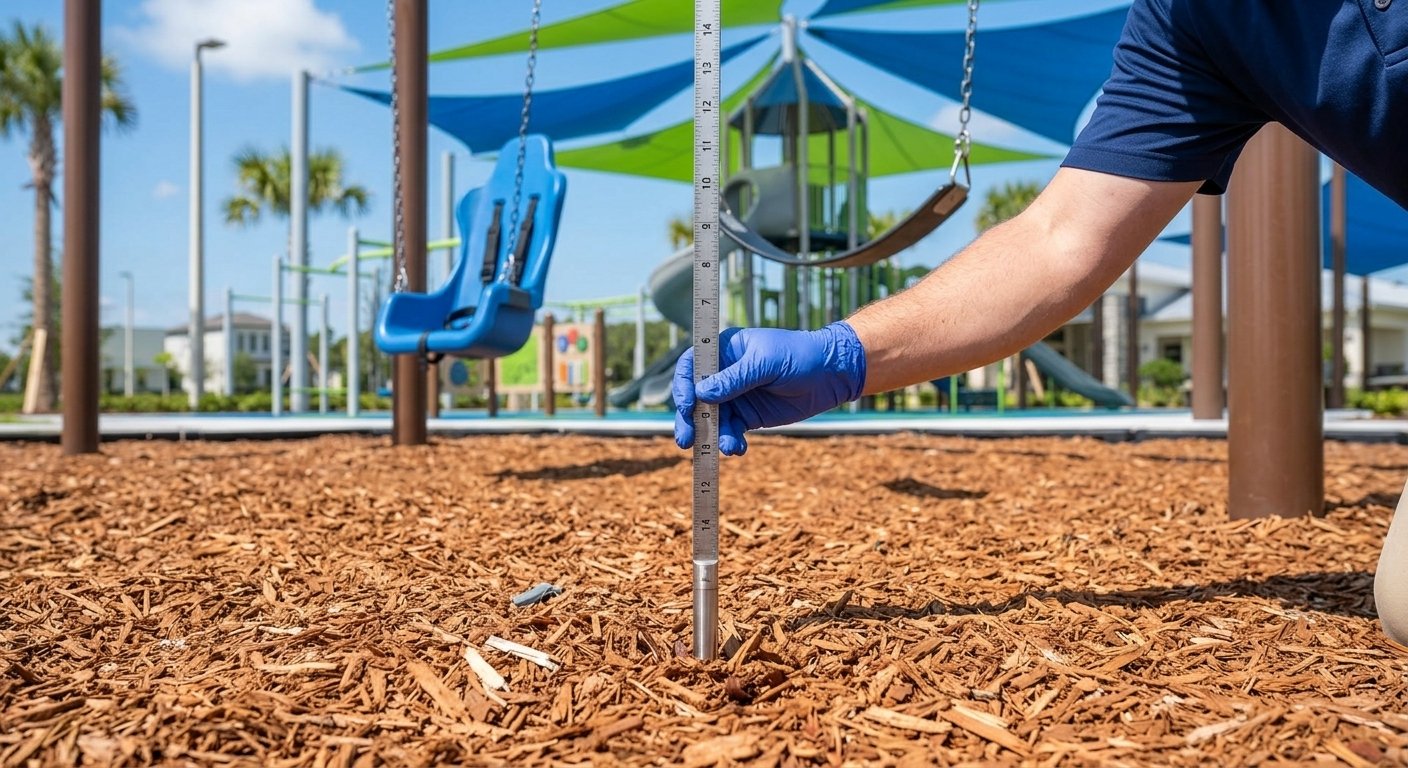
| Fall Surfacing Depth | 8 to 12 inches of Engineered Wood Fiber or certified rubber | Depleted surfacing (under 6 inches) exposing concrete footings |
| Swing S Hook Clearance | Closed completely (gap smaller than 0.04 inches) | Open or worn S hooks catching clothing or snapping |
| Entrapment Zones | Head and torso gaps between 3.5 inches and 9 inches banned | Non compliant ladder steps or barrier openings |
| Use Zones | 6 foot clearance perimeter around play equipment | Landscaping, benches, or fences built too close |
4. Protecting the HOA: A 4 Step Risk Management Protocol
To minimize liability and defend against frivolous claims, HOA boards should implement a structured, four part risk management system:
Step 1: Schedule Regular Multi Tier Inspections
- Weekly Sweeps: On site maintenance staff or property managers perform visual sweeps for glass, debris, damaged seats, or open gates.
- Monthly Checks: Evaluate hardware tightness, lubricate swing swivels, and measure surfacing depth in high use landing zones.
- Annual CPSI Audits: Hire an independent Certified Playground Safety Inspector (CPSI) to conduct a full audit using calibrated head/torso probes and impact testing tools.
Step 2: Maintain a Centralized Digital Record
In a lawsuit or insurance claim, undocumented maintenance is treated as non existent maintenance. Keep a digital binder containing:
- Signed inspection logs and weekly checksheets.
- Invoices for replacement parts and surface top offs.
- Official CPSI inspection reports.
- Written records of resident safety reports and board responses.
Step 3: Post Proper Signage & Community Rules
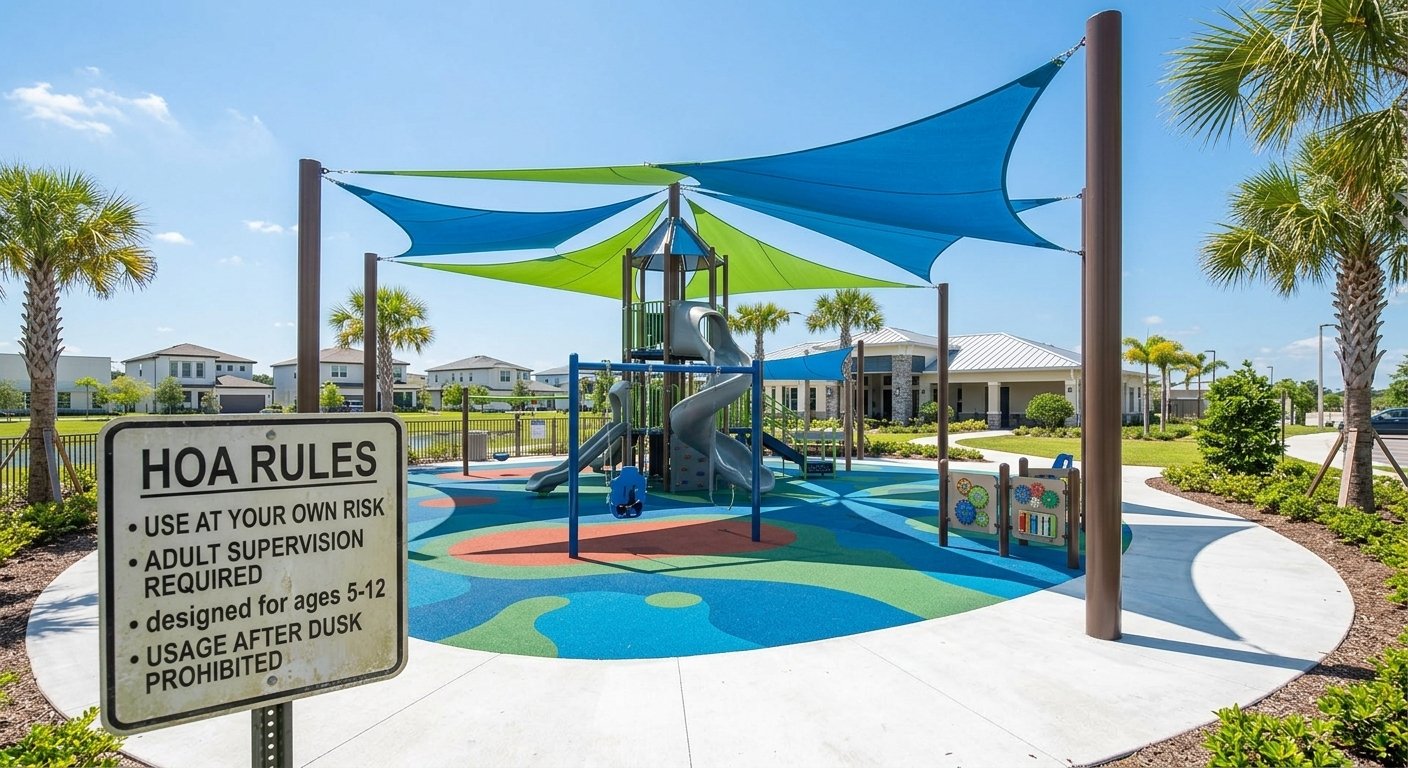
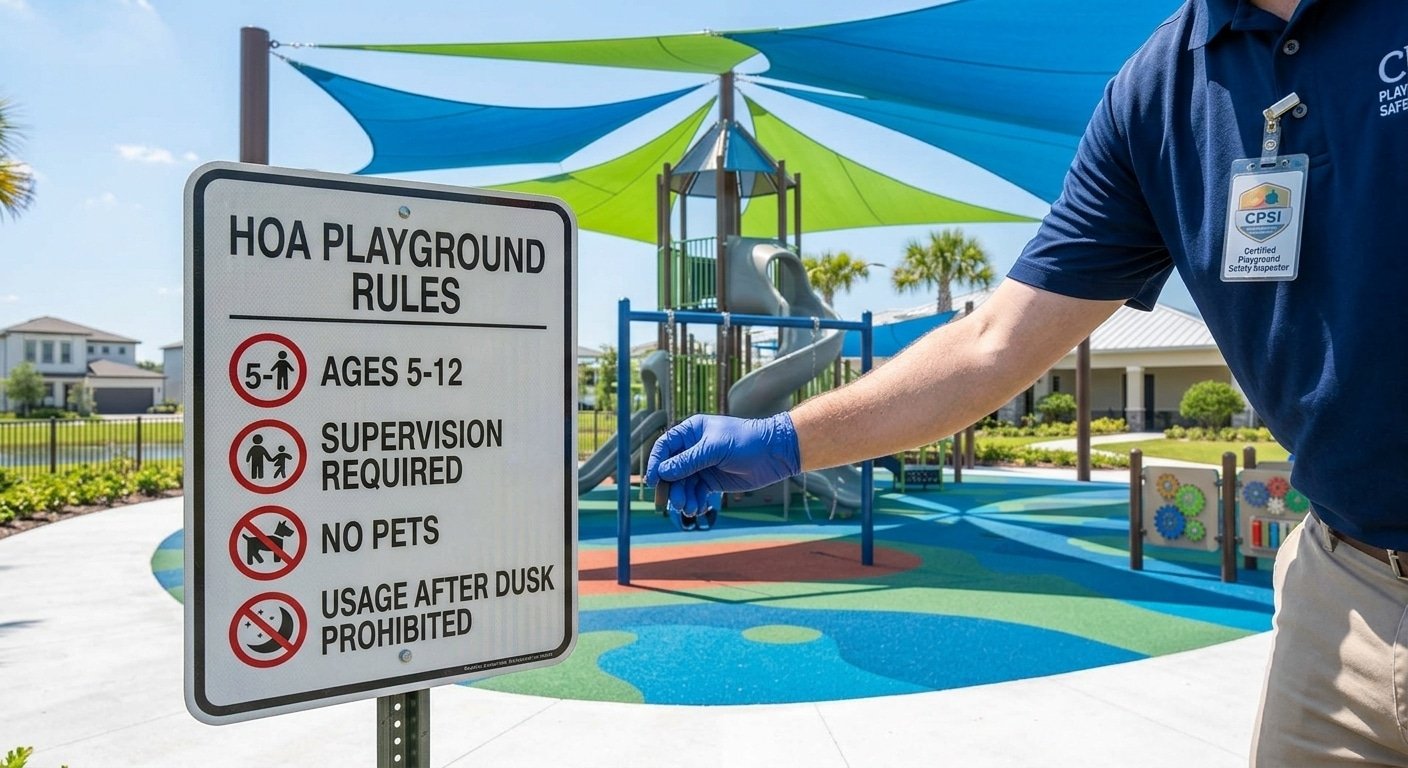
Post visible, weather resistant signage near the entrance outlining playground rules:
- Recommended age groups (e.g., “Designed for Ages 2–5” or “Ages 5–12”).
- Requirement for adult supervision.
- Prohibition of glass containers, pets, and usage after dusk.
- HOA emergency contact information to report damaged equipment.
Step 4: Verify Insurance Coverage & Vendor Certifications
Review the association’s commercial general liability insurance policy annually to verify playground coverage limits. Additionally, when hiring third party contractors for repairs or installations, ensure they provide proof of general liability, workers’ compensation insurance, and CPSI certification.
Board Member Checklist for Playground Safety Compliance
- [ ] Verify that current liability insurance policies explicitly cover playground common elements.
- [ ] Establish weekly visual checks and monthly surfacing depth measurements.
- [ ] Ensure loose fill surfacing maintains a consistent depth of 8 to 12 inches.
- [ ] Schedule an annual third party Certified Playground Safety Inspector (CPSI) audit.
- [ ] Maintain digital copies of all maintenance logs, parts invoices, and safety reports for at least 5 years.
By staying proactive, recognizing Florida specific environmental hazards, and maintaining documented inspection schedules, HOA board members can protect community children from preventable injuries while safeguarding the association from catastrophic legal liabilities.